Showing posts with label quality. Show all posts

Monday, January 12, 2015

Improvement We Care For: DFCM, QI Program at U of T

It is known that most - if not all - Quality Improvement and Process Excellence experts have one goal in mind: to make processes, services, and products sustainably better. Whether various Continuous Improvement (CI) initiatives address waste in manufacturing or flow efficiency in services, we all aim at eliminating errors, deficiencies, redundancies, and variation in any given setting. When it comes to making lives better however, there are no more important initiatives than the ones that address the health and quality of living of human beings.

That is exactly what the Department of Family & Community Medicine’s (DFCM) Quality Improvement Program at the University of Toronto has been doing. Since 2010, this group of highly trained health care professionals specialized quality improvement (QI) training opportunities to DFCM including mandatory QI training for residents, QI training opportunities for faculty, an online library of quality-driven projects, and a newsletter that celebrates QI successes of the approach.

Adapted from the Institute of Medicine, the DFCM Quality Improvement Program has embraced the six quality dimensions in its quality efforts:


1. Safety: no one should be harmed by health care.

2. Timeliness: the right care, at the right time, in the right setting, by the right health care provider.

3. Equitability: services to all without discrimination.

4. Effectiveness: servicing based on the best evidence available.

5. Efficiency: avoiding wasteful services, or services where benefits to the patient is unlikely.

6. Patient-centered: ensuring that patient values, needs, and preferences guide clinical decisions.

These dimensions are excellence-oriented processes and they provide DFCM faculty and staff with resources and an approach that help guarantee the correct execution of QI initiatives. For example, teams at the DFCM develop and submit QI Plans each spring to support their organization's QI goals.


It’s well known that it is extremely important to properly address the planning phase in DMAIC projects. DFCM's emphasis on planning helps to ensure the correct approach to quality improvement projects is taken. A quick look at the DFCM’s QI Program website link will also showcase the various resources and knowledge that have been collected and put to use in the health care setting. For example, explore the program's primary care QI newsletter for current events and success stories.


For more on DFCM Quality Improvement news please visit their home page at:


eZsigma Group is proud to be a partner of the DFCM's efforts towards Quality Improvement. We congratulate these health care professionals for putting process excellence in the hands of those who look after the most valuable asset of all: the human life.

Edited by Patricia O'Brien and Allison Mullin.

Wednesday, July 9, 2014

Office Kaizen, Part 3/4 (Information Wastes)

In our third discussion on Office Kaizen, we address a type of waste that is extremely important to eliminate, or at least minimize, in any organizational setting. Information Waste is the waste that occurs due to the less than optimum information content in a value stream. There are five types of information wastes, as follows:

Translation Waste: requires effort to correct, change, reassess, and rework data, reports, formats, standards, and process steps. It occurs often in organizations of any size and it consumes managers' time. It can also lead the organization to costly errors and mistakes. In an Office Kaizen setting, the most likely solution to translation waste is to ensure that leadership focuses on factual data that are supported by metrics and simplified in their nature. Less is more here. Standardization (and sticking to it) may also help with the level of translation applied to processes.

Missing Information Waste: this type of waste requires extended efforts to compensate for the lack of information in procedures and processes. Office Kaizen teaches us that a hard look at the value stream to identify key metrics and information flow must be performed in order for the organization to cover all pieces of the puzzle. Visual boards should also be reviewed with respect to flow and cadence of information in the system.

Hand-Off Waste: this type of waste requires the extra effort (effort that the customer does not pay for) to compensate the loss (or improper adjustment) of information due to the hand-off being inadequate. Consider for example, when the next department in the value stream "adjusts" numbers from previous steps without a reason. An Office Kaizen organization would tackle this waste by assigning daily metrics and detailed procedures that are to be strictly followed during the hand-off of information. It may sound like bureaucracy at first, but it will guarantee a better and more accurate value stream in the long term.

Irrelevancy Waste: relates to the energy spent to deal with unnecessary information, or the efforts needed to correct issues that irrelevant information may have caused to the organization's processes. Leadership plays an important role here in supporting the avoidance of unnecessary presentations, revisions, additions, and changes to documentation that are not related to the process (value added). Once again, a good look at the value stream and its steps may be needed in order for the organization to clean up the non-value added pieces of information in the flow.

eZsigma Group offers a highly qualified group of experienced professionals who can help your organization achieve higher levels of productivity, efficiency and employee morale. Contact us to learn more about our programs.

Wednesday, July 2, 2014

Office Kaizen, Part 2/4 (Process Wastes)

This post addresses the second set of wastes in our series of 4 Office Kaizen discussions. There are 12 wastes when it comes to process, and they are briefly discussed below. Lareau (2003) calls our attention to avoid mixing some of the following wastes with some of the people wastes discussed in the first post of this series.

Control Waste: this waste refers to unnecessary and extreme supervision of work. It sometimes creates irrelevant tension in the work environment which, in turn, lowers employee morale. Work groups (or cells) are the ideal setting in an Office Kaizen environment. As well, clear metrics, strategic alignment, and personal development plans should help the organization to rapidly identify issues in the process.

Variability Waste: resources that are utilized due to outcomes that deviate from the expected or normal outcomes. These resources are typically involved with activities related to re-working solutions, recalling products, and amending services that did not deliver the expected outcome in the first place.

Tampering Waste: the effort required to adjust a process which has been arbitrarily changed without foresight, and the efforts to deal with the consequences of those changes. In an Office Kaizen environment, no arbitrary changes without foundation on metrics, impact on outcomes, and employee's morale would take place.

Strategic Waste: relates to value lost due to the efforts that are concentrated on short-term goals and/or immediate internal customer needs only, i.e. it does not impact the company's long term objectives. Normally, an Office Kaizen approach would be to look into the entire value chain and identify perils about the short-term gains versus the long term losses.

Reliability Waste: efforts related to the correction of unpredictable outcomes that are the fruit of unknown causes. The most likely approach to this situation in an Office Kaizen environment would be to have procedures, visual and/or job aids, and standards that inform the operator of the procedures associated with the unpredictable outcomes (call it the B plan).

Standardization Waste: efforts wasted to correct the variance among operators of the same task. In other words, one operator performs better than the other. The ideal solution here is that the best practice be followed by others, and that the best performer trains (or helps) the others to achieve the standard expected.

Sub-optimization Waste: may also be called "the tug of war of processes or departments". This type of waste happens when competing processes a) duplicate the work needed for the entire value chain or b) "compromise each other and degrade the final outcome" (Lareau, 2003, p. 29).

Scheduling Waste: energy spent on compensating activities due to their poor scheduling. A well functioning Office Kaizen would schedule activities respecting their flow, timing, gaps, overlaps, and breathing in between them.

Work-around Waste: the famous informal, out-of-control, and DIY (Do It Yourself) type of procedure that overweighs the formal procedures the organization has in place. Normally the outcome of such procedures are penalties and more control, but in an Office Kaizen mentality, the group involved would look for best practices, share them, and make them the official way of doing things, while at the same time always looking for improvement opportunities.

Uneven Flow Waste: resources allocated to correct the uneven flow of material or information "sitting" somewhere in the process (similar to inventory waste). Just as in a manufacturing setting, the work group in an Office Kaizen would evaluate the value chain and focus on bottlenecks that may be piling up unnecessary materials or information.

Checking Waste: efforts put into the constant inspection of activities due to the poorly designed value stream. Checking, double-checking, and triple-checking are non-paying activities in the eyes (and pockets) of the customer. As in any continuous improvement (CI) approach, the design of the process should aim for an error-free outcome, as once put by Phillip Crosby.

Error Waste: the efforts spent on re-doing, fixing, and amending what has not been done properly in the first place. Although a certain degree of error is expected in all processes, the CI professional in an Office Kaizen environment should always set up the process with enough error-proofing (poka yoke) techniques and methods to secure the correct outcome as much as possible.

The next post will address Information Waste. eZsigma Group offers onsite analysis of processes and their constraints. For a more in-depth discussion on what your organization needs to become a better one, please contact us directly at rperdigao@ezsigmagroup.com.

Reference: Lareau, W. (2003). Transforming Office Operations Into A Strategic Competitive Advantage. Milwaukee, USA: ASQ Quality Press.

Tuesday, June 24, 2014

Office Kaizen, Part 1/4 (People Wastes)

Process excellence professionals are often, and rightfully so, concerned about eliminating waste at their manufacturing facilities (tangible processes). Whilst this is indeed considered an easier-to-measure approach, other enabling functions of the organization such as the procurement, HR, and accounting departments, to name a few, also carry an incredible amount of waste in their daily activities. It is important to mention that the core functions of a business (sometimes referred to as industrial or productive) are without a doubt the most likely areas that need efficiency and effectiveness working at their peaks. But let us not be naive enough to completely ignore the fact that enabling (or back office) processes are just as important. This series of four posts based on the popular book Office Kaizen, Transforming Office Operations Into A Strategic Competitive Advantage (Lareau, 2003) addresses some of the most common wastes that any organizational setting may find in their enabling processes.

Part I, People Wastes

Goal Alignment Waste: this is about the typical "let's do it ourselves" mentality. When new rules are set in place, departments try to work them out (or figure them out) as individual silos. Procedures are set for different areas of the organization but a meaningful alignment of objectives is neglected. In fact, goal alignment waste can be amplified if the processes involved in such change (of a rule, a goal, a procedure etc.) are not working as a value stream. In a typical Office Kaizen approach, "the executive steering committee (ESC) charters a cross-functional change team to work out a solution that is cost-effective across the entire value stream over the long term." (Lareau, 2003, p. 22).

Assignment Waste: grab your pen and paper, fire up your PowerPoint - it is time to produce irrelevant and unnecessary reports! In this type of waste, someone "believes" that a 45-page long report on process improvement is a must to convince the boss of something, in case the boss wants to see it. The outcomes are twofold: 1) no one will ever read the report, or 2) someone will read the report and the likelihood of a bad decision made on fluff becomes very high. Lareau (2003) suggests that a Lean Daily Management System (LDMS) be implemented in each work group, and that  ESC-chartered teams produces brief reports on small improvements that are taking place in the organization.

Waiting Waste: the waste of resources lost due to the waiting of information, meetings, phone calls, signatures, tech support, and so on. Called by Lareau as "accepted waste". In a Office Kaizen environment, work groups (sometimes called cells) will 1) monitor how efficient their processes really are and what type of wastes are being experienced and 2) conduct value stream mapping to tackle the most identified wastes the group may be facing. At a later stage, the teams can also expand their analysis into cross-functional wastes (wastes carried from and to other functions of the organization).

Motion Waste: in its most simplistic form, imagine a sales rep having to walk to the very end of the hall to access a fax machine. Or the warehouse manager who needs to spend hours and walk miles around the warehouse to ask simple questions about shipping orders. Non-value added time spent in any process is a waste. Let's remind ourselves that waste in Lean (and Office Kaizen) means activities that the customer will not pay for. The approach to tackle this form of waste in a Office Kaizen environment is as follows: 1) through the use of a spaghetti diagram the team identifies what represents non-value added motion within the organization, and 2) Kaizen Blitzes can quickly and effectively identify metrics that represent how much of walking around means waste.

Processing Waste: "work smarter not harder" - a typical headline in various process improvement initiatives. Processing waste is simply that. It represents any task that could be done in a more effective and smarter way. Lack of training is a huge contributor to this form of waste. A sales person might spend twice the time to prepare a proposal if the information and the knowledge required to do so has not been passed onto him/her. The approach through a Office Kaizen mentality would be to use the employee's skills backed-up by procedures to accomplish the task in its most efficient way.

The next post will address Process Wastes. At eZsigma Group, we take pride in helping customers of all sizes and industries to perform better, increase employee morale, and run their organizations smoother through the application of proven methods and tools of quality management. Contact us for more information.

Reference: Lareau, W. (2003). Transforming Office Operations Into A Strategic Competitive Advantage. Milwaukee, USA: ASQ Quality Press.

Tuesday, November 12, 2013

Cost of Quality

How does one put a dollar figure to quality-related activities? In this post, we address the main areas of concern when it comes to financially measuring quality (or the lack of). Cost of quality refers to the costs of not producing a quality product or service. It is an important measure that showcases how much, dollar-wise, a firm is spending on activities that need to be performed in order for the product or service be of an acceptable quality. With a bit of variation in the literature on cost of quality, the main four areas of concern, and  the areas in which you can build a case for justifying doing things right the first time, are:

Prevention costs: what are the costs related to avoiding an issue with a product or service? Consider quality planing, training, preliminary process evaluation, management systems development, product design inspection (or verification), and so on. These are the costs a company must address even before it starts to produce a good or deliver a service.

Appraisal costs: calibrating, auditing, acceptance-testing, inspecting, and any other cost associated with the checking phase of a product or service development. Companies that are TQM-oriented usually educate employees to be a constant checker, however there are still clearly identifiable appraisal costs in any organizational setting.

Internal failure: these costs include scraping, reworking, downgrading, down-valuing, and material-reviewing to name a few. This is perhaps the most easily and visually identifiable costs of any process. It is important to mention that for the service industry, these can also be related to data loss, disruption in service, and errors in processing orders.

External failure: the costs that any organization want to avoid at all costs (no pun intended). Not only this is about cash outflow but it also refers to issues in which a company does not want to have. Warranty issues, product recall, defects, returns, complaints management, and the one we should be most concerned about: the loss of reputation.

Be mindful that sometimes certain costs (such as prevention costs) may deliver a reasonable benefit after all. Perhaps it is there that quality practitioners should be more focused on, in order for the product's or service's other costs be minimal. Evaluating the right costs is an important piece of any quality or process improvement engagement. eZSigma can help your organization in successfully achieving this milestone.

Tuesday, October 8, 2013

Using Scatter Diagrams to Understand Two Variables’ Relationship


Have you ever wondered why a certain product sells more in a given season? Have you thought about how complicated forecasting sales would be without any indication of when your organization should produce more or less? What about hotel chains, how do they work around the optimum occupancy rate?

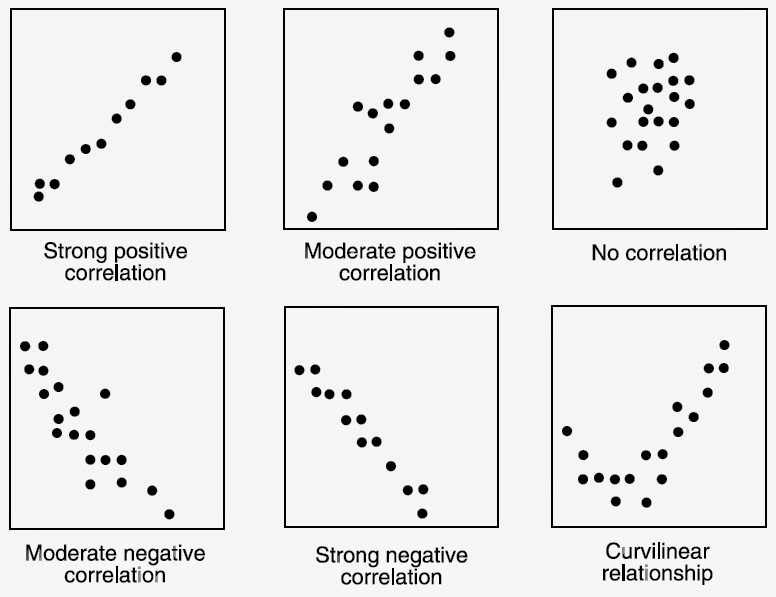
A Scatter diagram is one of the Seven Traditional Quality Tools. It offers business practitioners an easy way to understand what the correlation between two variables is. But why is it important for you to know that? Imagine that your efforts in either hiring temp workers, or producing a product, or selling a course revolves around not only market demand but also around when the demand exists. Now imagine the amount of defect parts your process produces exactly when you receive shipments from a certain supplier. Understanding the correlation between two variables does exactly that: it lets you explore the possible impact of an independent variable on a dependent variable.  Let’s work with a simple example: consider the relationship between water consumption during a marathon in the summer and the temperature outside. I can certainly state that the hotter it is outside the more water a runner tends to consume. I believe you’d agree with that. Now let us switch gears. Can I say that the more water a runner consumes the hotter it is outside? Not really, the temperatures in the summer have nothing to do with how much water one drinks.

There is also a formula for calculating the relationship between two variables (called correlation coefficient). Excel can easily and quickly calculate that for you. (Check link at the bottom of this post). Furthermore, it is equally important to understand if the two variables you are studying have a weak or a strong correlationship, or if they have a correlationship at all. The image placed at the top of this post shows the more important types of relationships. Put yourself to the challenge: what are the types of relationships your process may have? As always, eZsigma is here to help in case you need further education on this and other topics related to the Seven Quality tools and process improvement.